



A practical, consultative guide for Jordanian businesses planning digital systems that reduce manual work and scale operations.
Digital Systems for Businesses in Jordan: A Practical Guide
Many companies in Jordan reach a point where daily operations start to feel “heavier” than they should: approvals happen over messages, tasks live in scattered notes, and reporting depends on manual updates. This is usually the moment when digital systems for businesses in Jordan stop being “nice to have” and become essential to maintain clarity, speed, and consistency.
This guide explains what digital systems really are (in business terms), why they matter, and how to decide what you need before building anything. The goal is simple: help you invest in a system that reduces friction, supports growth, and remains maintainable over time.
If you want to see practical implementation examples, you can review: Dot Tech Projects.

1) What “digital systems” mean for a business
A digital system is not just a “tool” — it is a structured way to run work. In practical terms, it’s a business management system that defines: who does what, in what order, using which data, with clear visibility and accountability. When done correctly, the system becomes a single source of truth for operations.
Most businesses don’t need “complex software” on day one. They need internal systems that remove repeated manual tasks, reduce mistakes, and keep teams aligned. This is where workflow automation becomes valuable: it turns recurring steps (requests, approvals, follow-ups, reporting) into consistent processes.
Simple test: If your business relies on people “remembering what to do next,” you don’t have a system — you have effort. Digital systems convert effort into repeatable operations.
2) Why businesses in Jordan actually adopt digital systems
For many companies, the move toward digital systems for businesses in Jordan is not driven by trends, but by pressure. As teams grow and operations expand, manual coordination starts to break down. Tasks become harder to track, decisions slow down, and reporting turns into a time-consuming process.
This is where business automation in Jordan becomes practical rather than theoretical. Automation helps businesses replace repeated manual steps with predictable workflows, ensuring that work continues even when people are busy, absent, or scaling across locations.

In the Jordanian market, digital systems are often introduced to solve very specific problems: delayed approvals, duplicated work, inconsistent data, or the inability to see what is happening across departments in real time. When these issues persist, growth becomes harder to manage.
A well-implemented system improves operations management by making responsibilities visible, reducing dependency on individual effort, and creating consistency across teams. Over time, this leads to faster execution and more confident decision-making.
3) The most common types of digital systems businesses use
Not all digital systems serve the same purpose. Most organizations adopt different systems depending on where friction exists. Understanding these categories helps avoid overbuilding and keeps the focus on real operational needs.
Operational systems
These systems support daily execution: task tracking, approvals, internal requests, and process follow-ups. They reduce reliance on messages and spreadsheets and create predictable workflows that teams can rely on.
Customer and sales systems
Designed to manage leads, customers, communication history, and follow-ups. These systems improve visibility across sales and support teams while keeping data consistent.
Management and reporting systems
Reporting dashboards and performance views allow decision-makers to see what is happening without requesting manual updates. This improves transparency and reduces delays in strategic decisions.
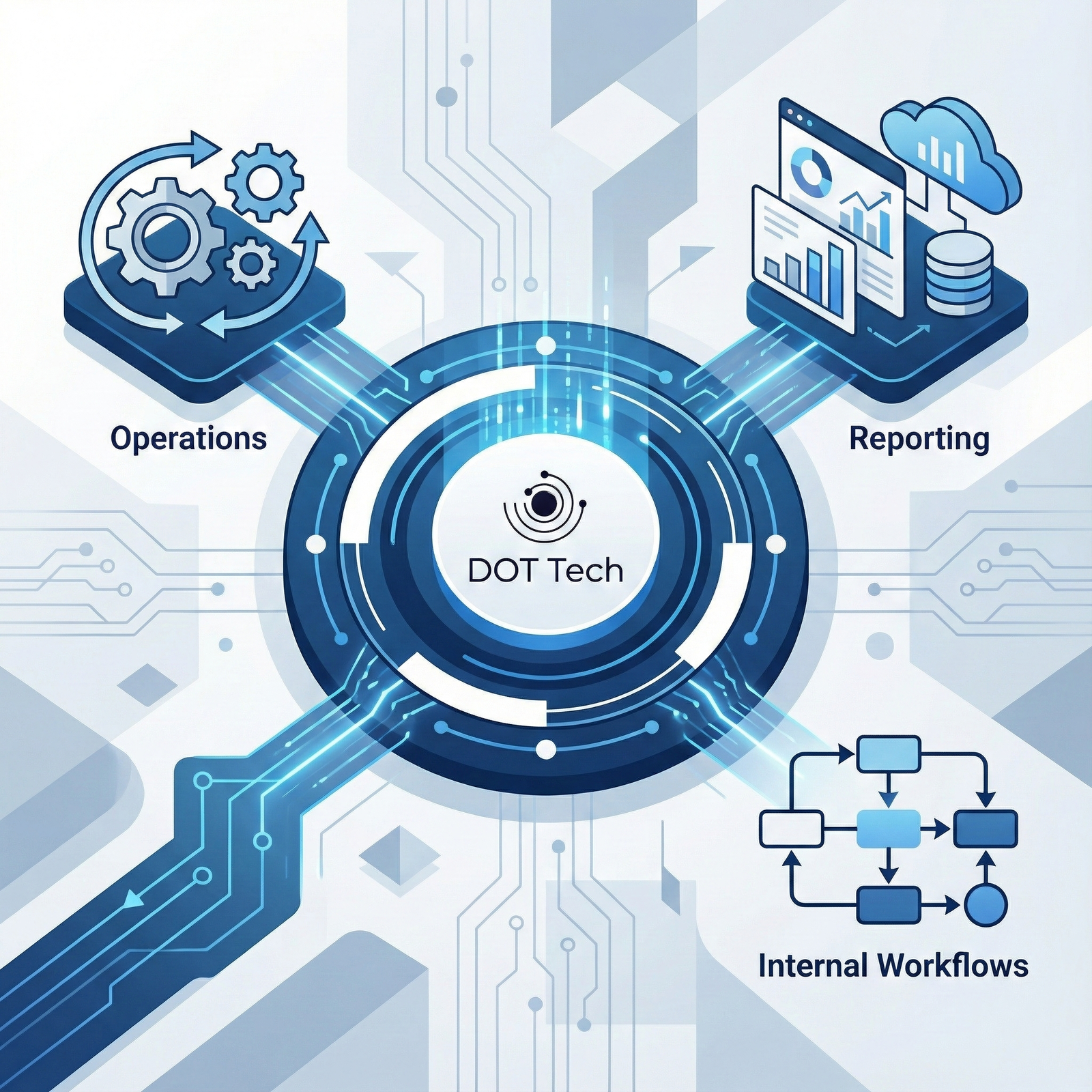
In many cases, these categories overlap. A single business management system can combine operations, customer data, and reporting when designed around actual workflows.
4) Digital systems vs manual work: where the real difference appears
Manual work often feels flexible at first. Teams communicate quickly, decisions happen informally, and tasks are completed through messages or shared files. As volume increases, however, this flexibility turns into inconsistency.
Digital systems for businesses in Jordan introduce structure where manual work introduces risk. They reduce dependency on memory, individual effort, and repeated clarification. Instead, processes become visible, measurable, and repeatable.
Manual work relies on people.
Digital systems rely on process.
Sustainable growth requires the second.
Businesses that adopt digital systems usually notice improvements in four areas: execution speed, data accuracy, accountability, and visibility. These improvements are cumulative — small gains across daily tasks result in significant operational stability over time.
5) When a business is not ready for a digital system
Not every company is ready to implement a digital system immediately. In some cases, introducing software too early creates frustration rather than efficiency.
A business may not be ready if processes are undefined, ownership is unclear, or there is no agreement on how work should flow. In these situations, custom software development in Jordan should be postponed until basic operational clarity exists.
The goal of a system is not to “organize chaos,” but to support a process that already exists. Defining responsibilities and decision paths first makes any future system more effective.

6) How digital systems are usually built (without unnecessary complexity)
The most reliable approach to building digital systems is not “start development quickly,” but start with clarity. A system should reflect how the business works, not how software is usually packaged. This is why digital systems for businesses in Jordan succeed when they are built around real workflows.
Step 1: Identify the real operational problem
The starting point is a clear operational pain: delays, duplicated work, missing visibility, inconsistent data, or tasks that depend on manual reminders. This step defines what success looks like, before any features are listed.
Step 2: Define scope and priorities
A good system roadmap separates what is essential for initial delivery from what can wait. This prevents uncontrolled expansion and keeps the first version focused on real impact. It also makes workflow automation measurable by linking it to specific repeated processes.
Step 3: Build in stages with early visibility
Reliable delivery is incremental. Instead of waiting for a “big final launch,” businesses benefit from early working versions that allow review, improvement, and refinement. This reduces rework and keeps direction aligned with the business.
Step 4: Testing, handover, and continuous improvement
Systems should be tested using real scenarios, then handed over in a way teams can actually use. Over time, improving operations management depends on stable usage, proper ownership, and iterative improvements based on real behavior.
If you want a clear view of how Dot Tech approaches implementation outcomes, review: Dot Tech Services.
In some cases, building a strong system also depends on clear communication, content, and brand consistency — especially when the system is customer-facing. For businesses that need development aligned with branding and strategy, you can explore related services provided by Dot Media.
7) Common mistakes businesses make when implementing digital systems
Mistake 1: Building too much too early
Many projects fail because the first version tries to do everything. The more features included without validation, the harder it becomes to maintain and improve. A staged approach creates faster wins and lower risk.
Mistake 2: Automating unclear processes
Automation does not fix broken processes. If a workflow is unclear, automating it creates confusion faster. Clarify the process first, then automate what repeats.
Mistake 3: Ignoring reporting dashboards
Without visibility, systems feel like extra work. When teams can see progress and performance clearly, adoption improves. Effective reporting dashboards reduce manual follow-ups and improve decisions.
To discuss what type of system fits your workflows and priorities, you can reach: Contact Dot Tech.
8) How to decide what system you actually need
Decision clarity comes from mapping your business reality to the simplest system that solves it. A practical framework is to define four points:
- Problem: What is slowing execution or creating repeated errors?
- Process: What steps repeat weekly or daily?
- People: Who is responsible, and who needs visibility?
- Growth: What changes when volume increases (customers, branches, team size)?
When these points are clear, choosing the right system becomes easier. Whether you need simple internal tools or custom software development in Jordan, the priority is always the same: reduce friction and create operational stability.
9) Frequently Asked Questions about Digital Systems in Jordan
What are digital systems for businesses in Jordan?
Digital systems are structured tools that help businesses manage operations, data, and workflows in a consistent way. Instead of relying on manual coordination, they provide visibility, accountability, and repeatable processes that support growth.
Are digital systems suitable for small and medium businesses in Jordan?
Yes. Many small and medium businesses benefit the most from digital systems because they reduce manual work early and prevent operational chaos as the company grows. The key is starting with the right scope.
Is business automation in Jordan expensive to implement?
Costs depend on scope and complexity. Automation does not always mean large systems. Many businesses start with focused workflow automation that delivers quick efficiency gains before expanding further.
How long does it take to build a digital system?
Timelines vary based on requirements. Well-scoped systems are usually delivered in stages, starting with core functionality and expanding over time. Early clarity reduces delays and rework.
Do businesses need custom software development in Jordan?
Custom software development becomes necessary when off-the-shelf tools cannot support specific workflows, integrations, or scalability needs. The decision should be based on operations, not trends.
What is the biggest mistake companies make with digital systems?
The most common mistake is automating unclear processes. A digital system should support an already understood workflow, not replace the need for operational clarity.
