


A practical, consultative guide to help you make the right decision before starting any digital project.
How to choose a software development company in Jordan: a practical decision guide
Choosing a development partner is not a “technical” decision only — it’s a business decision that impacts your timeline, budget, and long-term outcomes. Many projects fail not because the idea is weak, but because requirements were unclear, scoping was rushed, or delivery was promised without a measurable plan.
If you want to review real execution examples before deciding, you can explore Dot Tech Projects.

1) Why choosing the right company matters
You’re not “building a website” or “launching an app” only — you’re building a digital asset that becomes part of daily operations: sales, customer support, order management, reporting, and sometimes inventory or multiple branches. When requirements are misunderstood or scoping is weak, the cost shows up later as delays, rework, and systems that don’t serve the business goal.
A practical rule: if the team does not ask how your workflow operates (how sales happen, where the bottlenecks are, who the users are, what data is needed), you may get a “technical build” — but not a useful business solution.
With the rise of digital transformation in Jordan across sectors, choosing the right partner becomes a competitive advantage — not just a task to outsource.

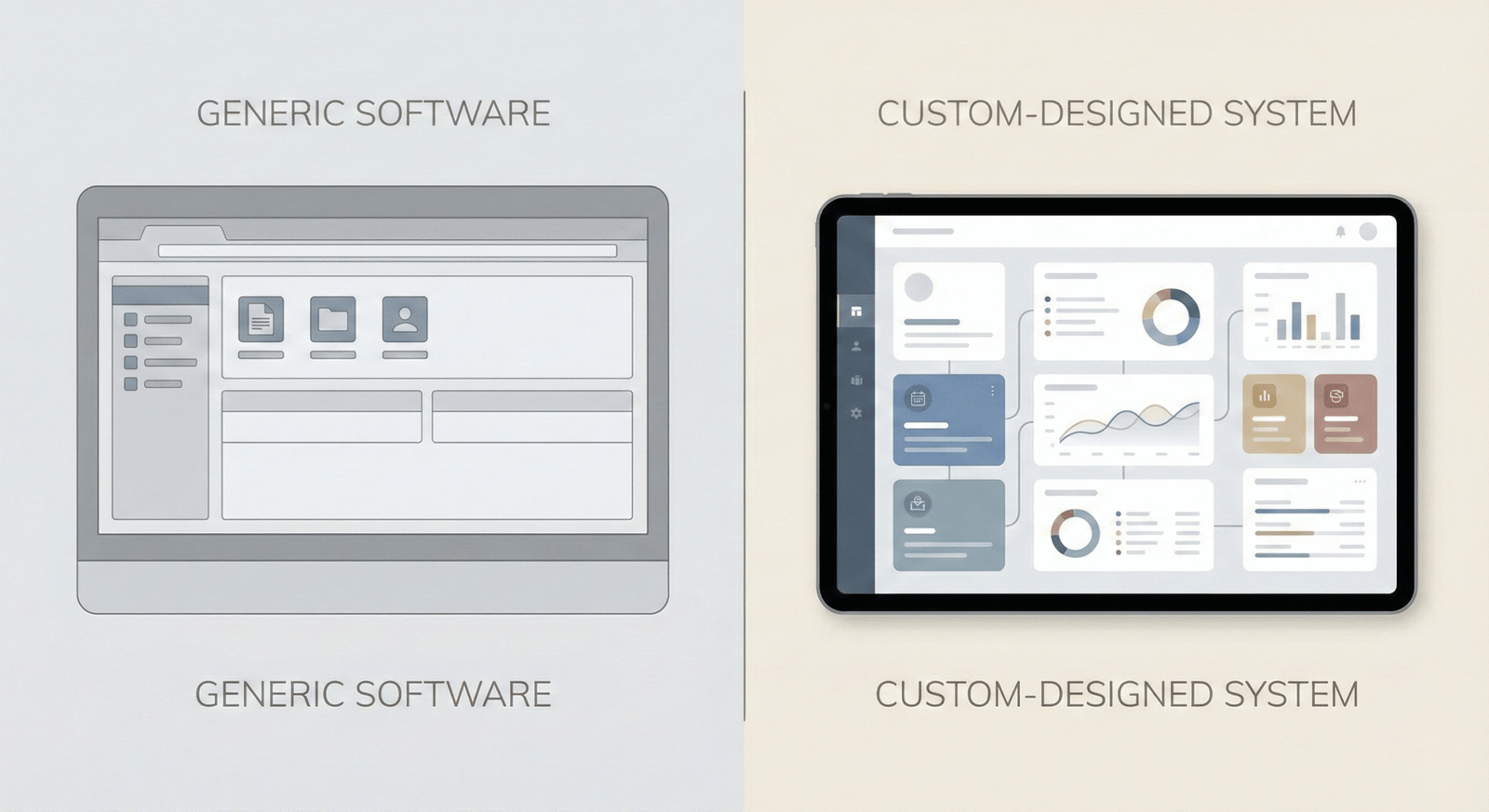
2) Custom vs off-the-shelf: what do you actually need?
When custom development is the right move
- You have repeating internal processes that consume time (orders, approvals, reporting, follow-ups).
- You need roles, permissions, integrations, and reports built around your real data.
- You want scalable custom software solutions, not short-term patches.
- You plan to integrate messaging and support using the WhatsApp Business API.
When an off-the-shelf tool is better (and that’s normal)
- You’re testing the market and need a fast launch with lower cost.
- Your needs are simple and can be covered by a proven ready-made product.
- You don’t yet have the time to manage training and adoption for a larger system.
The goal is not “building software” as a goal — it’s choosing what supports the business decision now, while leaving room to scale. Many successful teams start simple, then move to custom once the need is confirmed.
3) Practical selection criteria (what to look for)
Criterion A: Understanding before pricing
A “final price” offered before understanding details is usually built on assumptions. A strong partner defines scope, priorities, milestones, and measurable outputs before committing to cost and timeline.
Criterion B: Structured delivery + documentation
Ask how the project is managed: milestones, iterative reviews, quality checks, and documentation. Documentation matters, especially if your internal team will maintain the system later — including business management systems where clarity is critical.
Criterion C: Experience design and performance together
You may need high-quality website design in Jordan, but visuals alone don’t create results. Speed, security, usability, and maintainability are equally important. This is the difference between basic web development in Jordan and building a product that truly supports operations.
Criterion D: Match the service to the goal
If your priority is mobile-first engagement, evaluate real experience in mobile app development in Jordan. If your priority is internal workflow control, focus on how the provider builds business management systems. If messaging drives sales and support, ask early about implementing the WhatsApp Business API properly.
To understand the full service scope, explore Dot Tech Services or start a focused conversation via Contact Dot Tech.

4) Pre-contract interview questions: how to evaluate any company objectively
The most reliable way to evaluate a software development company in Jordan is not by general promises, but by questions that reveal how they think, how they deliver, and how they manage risk. Use the questions below as a practical scorecard when you compare providers — whether you’re speaking with a software company in Amman or a remote team.
First: discovery and requirement clarity (before pricing)
- How do you learn our workflow before defining scope — do you produce a requirements document?
- What information do you need from us in the first week to avoid misunderstandings?
- How do you separate “must-have for launch” from “nice-to-have later” without hurting quality?
- In which cases would you recommend an off-the-shelf tool instead of custom development?
Second: scope, milestones, and delivery
- How do you document scope and get it approved before development starts?
- What counts as out-of-scope, and how do you handle changes?
- Do you deliver in milestones with measurable outputs for each phase?
- Do we review early prototypes, or do we wait for a final delivery?
Third: quality, security, and performance
- What testing do you run before launch (functional, UX, device compatibility)?
- What security practices are standard for your web and system builds?
- How do you ensure web development in Jordan projects stay fast on mobile and average networks?
- Do you implement backups, error logging, and recovery plans?
Fourth: support after launch
- What happens after delivery — warranty period, maintenance plan, updates?
- How do you handle urgent incidents, and what is the response time?
- Do you provide training and a user guide for our team?
- Can we add features later without rebuilding from scratch?
Fifth: questions based on what you’re building
Your questions should change based on the project type. If you’re building an app, test real delivery experience in mobile app development in Jordan. If you’re building a public-facing website, evaluate how they approach website design in Jordan and performance. If you’re building internal operations, ask how they structure business management systems — permissions, audit trails, and reporting.
- Mobile: Native vs cross-platform? How are updates and push notifications handled?
- Web: How do you manage speed, SEO fundamentals, and cross-device compatibility?
- Systems: How do you design roles, permissions, reporting, and approvals?
- Messaging: How do you implement the WhatsApp Business API with CRM or orders?
If you want to compare these questions to real execution examples, explore Dot Tech Projects.
5) Red flags: when you should pause and reassess
Red flags don’t always mean bad intent — but they often indicate a delivery approach that will cost you later. If you notice one or more of the signs below, reconsider before signing.
- Instant “final price”: a fixed quote before discovery or requirement clarity.
- No written scope: agreements are vague, without documented outputs.
- One-shot delivery: no milestones, no early prototypes, no iterative reviews.
- No documentation: no user guide, technical notes, or handover clarity.
- Overpromising: “we can do everything” without a plan, timeline, or constraints.
- No support plan: delivery ends at launch with no maintenance or response process.
Trust signal: strong partners don’t sell you “easy” — they explain risks clearly, then show you how those risks will be managed.

6) Common mistakes when choose a software development company in Jordan partner (and how to avoid them)
Mistake 1: choosing the cheapest quote instead of the right path
A low price can look attractive upfront, but the real cost often appears later as rework, delays, and repeated changes. Evaluate value: what outputs are included, how scope is defined, and how delivery is structured.
Mistake 2: starting build work before alignment
“Start now, clarify later” is one of the fastest ways to create conflict. Even a simple written scope prevents misunderstandings, sets expectations, and protects both sides.
Mistake 3: focusing on visuals only
Good visuals matter, but if the user journey is confusing or the site is slow, you lose trust and conversions. Strong outcomes come from combining website design in Jordan with performance, clarity, and maintainability.
Mistake 4: ignoring support and growth
Even a strong launch needs support. Ask what happens after delivery: maintenance, incident handling, updates, and scalability. This matters even more when you build business management systems that become part of daily operations.
To understand how Dot Tech positions its work approach and services, you can review the Dot Tech homepage and then compare it against the criteria above.

7) How to make the final decision with confidence
After reviewing the criteria, questions, and red flags, the decision becomes clearer when you connect everything to your real need. Use the checklist below to make a practical “go / no-go” decision before you sign with any software development company in Jordan.
- They asked about your workflow before discussing price (users, data, bottlenecks, outcomes).
- Scope is documented, approved, and measurable — not a vague promise.
- Delivery is milestone-based with early prototypes and review points.
- Testing is part of the plan (functionality, UX, device compatibility, performance).
- There is a clear post-launch support path (warranty/maintenance/incident response).
- The solution matches your real goal (public website vs internal operations vs mobile-first).
Practical step now: write a short problem statement (2–5 lines) and define one primary goal for the project. Then start the conversation through the Dot Tech contact page. This single step improves the quality of the proposals you’ll receive — from any provider.
8) FAQ — clear answers to common questions
How long does a software project usually take?
It depends on scope and delivery method. Most well-run projects follow phases: discovery and scoping, a prototype or early build, an initial release, then improvements. What matters most is not the “duration”, but having clear milestones and outputs for each phase.
How do I know if I need custom development or an off-the-shelf tool?
If you have repeating internal operations, need roles/permissions, reporting, integrations, or a system that matches how your team works, you likely need custom software solutions. If your goal is a fast launch to test the market, an off-the-shelf tool can be better to start.
What’s the difference between a software company in Amman and a freelance team?
Freelancers can work well for small, well-defined tasks. A company typically provides a broader delivery method: discovery, project management, testing, documentation, and post-launch support. The right choice depends on how critical the project is and whether you need long-term support.
Is website design in Jordan enough to increase sales?
Design matters, but it’s not enough alone. Outcomes depend on user experience, site speed, clarity of messaging, and the conversion path. That’s why it’s best to combine website design in Jordan with strong technical performance and clear content.
When should I focus on mobile app development in Jordan instead of a website?
When your value depends on repeated usage, needs push notifications or phone-native features, or your audience is mobile-first. If the goal is information, booking, or simple selling, it can start as a website and expand into an app later.
What does “web development in Jordan done properly” actually mean?
It’s not just building pages — it’s building a fast, secure, responsive site that’s maintainable, with a clear internal structure and linking. These elements improve trust and make the website easier to operate and scale.
How do business management systems help in practice?
They reduce manual work, improve data accuracy, speed up decisions through reporting, and unify operations across teams and branches. Their main value is turning day-to-day work into something measurable and manageable.
Is the WhatsApp Business API suitable for every business?
It’s suitable when WhatsApp is a core channel for sales, support, or customer communication — and you need organized messaging linked to customers, orders, and tickets. It requires correct setup and integration with your system or CRM to work effectively.
If your project needs marketing support alongside development, you can explore Dot Media.
Conclusion
Choosing a software development company in Jordan is a business decision as much as it is a technical one. The best partner understands your workflow before pricing, documents scope, delivers in milestones, tests before launch, and supports after release. That’s how you reduce risk and increase the chances of real results.
Explore Dot Tech Services or review Dot Tech Projects before you start.
One comment
Comments are closed.

[…] How to Choose a Software Development Company in Jordan: A Practical Decision Guide […]