



CRM systems for companies in Jordan: structuring sales pipelines, retention, and measurable performance
As companies grow, customer data becomes fragmented across emails, WhatsApp messages, spreadsheets, and personal follow-up notes. This fragmentation leads to lost leads, delayed responses, and inconsistent customer experience. This is where CRM systems for companies in Jordan provide operational structure and sales control.
A modern customer relationship management system centralizes all interactions, standardizes follow-up logic, and creates visibility across the entire sales lifecycle. Instead of relying on individual memory, companies operate through measurable pipeline stages.
In this guide, we break down what CRM actually changes inside an organization, how CRM implementation in Jordan should be approached, and how to avoid common mistakes that reduce ROI.
What CRM systems actually solve inside companies
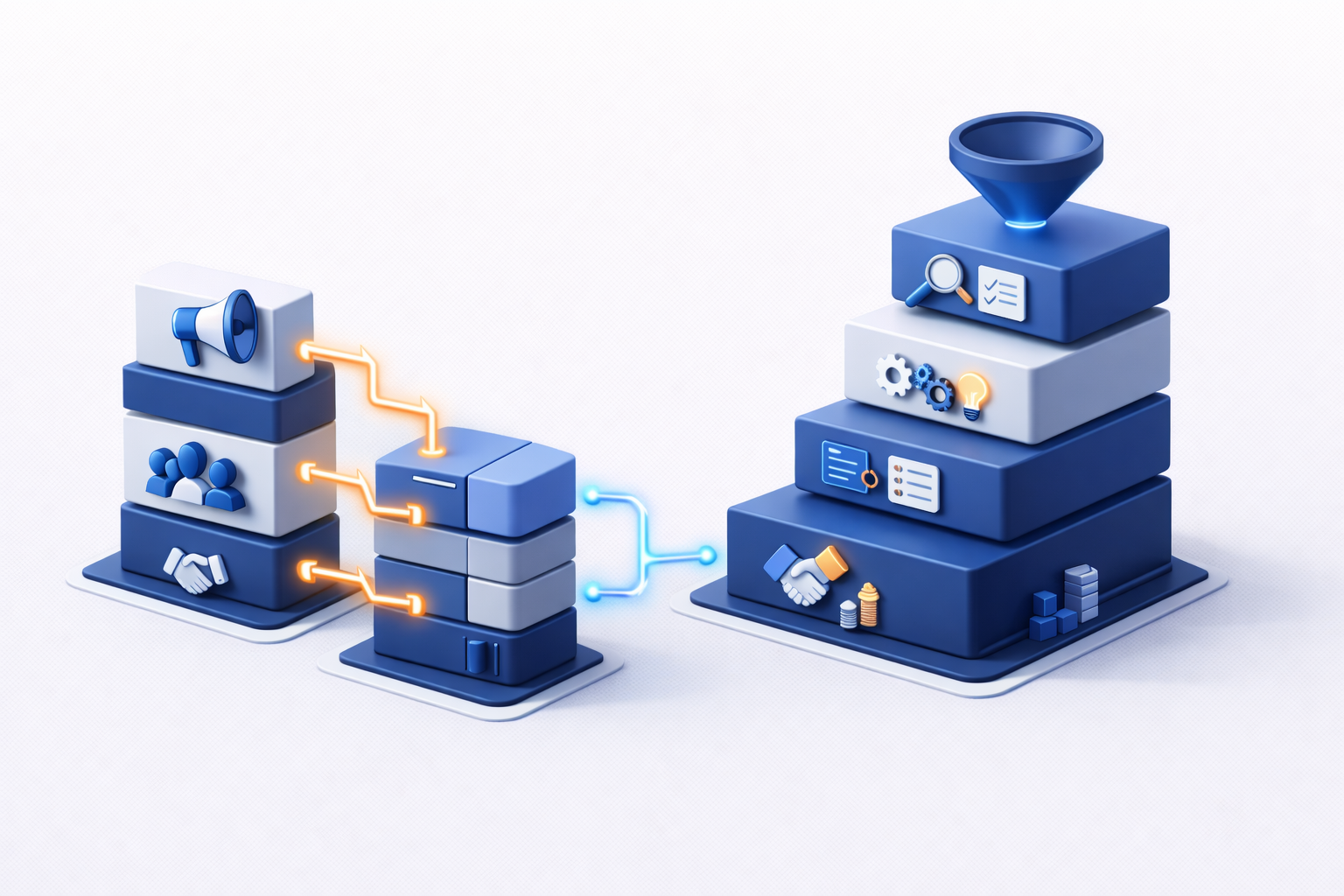
CRM is not simply a contact list. It is a structured sales control system. CRM systems for companies in Jordan ensure that every lead moves through defined stages, from initial contact to deal closure and post-sale retention.
- Centralized customer profiles
- Structured sales pipeline management
- Automated task assignments and reminders
- Conversion tracking and reporting dashboards
- Lead source performance measurement
The market problem: pipeline chaos and revenue unpredictability
Many companies experience revenue volatility not because of weak demand, but because of poor follow-up structure. Without a system, leads fall through gaps and managers cannot forecast performance accurately.
Common indicators that your company needs CRM systems for companies in Jordan:
- Leads stored across multiple channels
- No clear ownership of deals
- No unified revenue forecast view
- Customer history lost when employees leave
- Manual reporting processes
Next, we examine CRM types, implementation models, and how to select the right architecture based on company size and operational complexity.
Types of CRM systems for companies in Jordan
Not all CRM systems for companies in Jordan follow the same model. The right choice depends on sales volume, internal process complexity, and reporting requirements.
- Operational CRM: focuses on lead tracking, sales stages, and daily task management.
- Analytical CRM: emphasizes reporting, performance dashboards, and forecasting accuracy.
- Collaborative CRM: integrates customer data across departments such as sales, support, and marketing.
- Customized CRM: tailored solutions aligned with internal workflows and business logic.
Companies that already operate structured ERP systems in Jordan often integrate CRM to unify financial data with customer pipelines, ensuring operational and commercial visibility in one ecosystem.

Decision framework: choosing the right CRM approach
Before starting CRM implementation in Jordan, companies should evaluate three key factors:
- Sales complexity: number of pipeline stages and deal sizes.
- Team structure: centralized vs distributed sales teams.
- Integration requirements: connection with accounting, ERP, or automation systems.
In some cases, CRM projects are aligned with broader Business automation in Jordan initiatives to ensure consistent task routing and accountability across departments.
In the final section, we will outline common CRM implementation mistakes, measurable ROI indicators, and how to begin a structured CRM assessment for your organization.
Common CRM implementation mistakes
While CRM systems for companies in Jordan provide measurable control and visibility, many implementations fail due to poor planning rather than poor technology.
- Implementing CRM without defining sales stages clearly
- Overcomplicating fields and data entry requirements
- Ignoring team onboarding and adoption training
- Choosing tools that do not integrate with existing systems
- Failing to define measurable KPIs before launch
Successful CRM systems for companies in Jordan start with process clarity, sales mapping, and executive alignment before technical deployment.
Measuring CRM ROI in practical terms
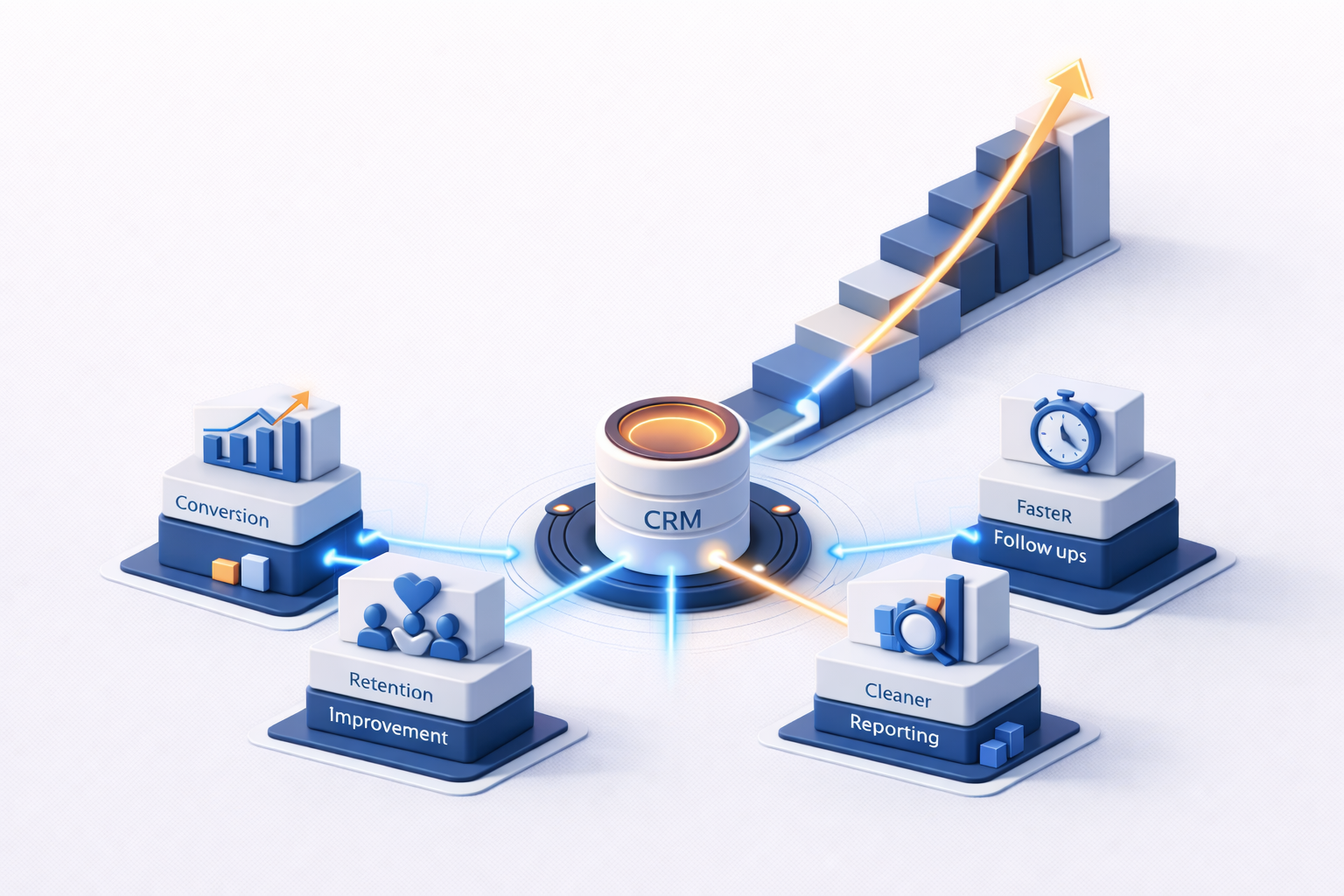
The impact of CRM is measurable. Companies typically evaluate performance improvements through:
- Lead response time reduction
- Pipeline visibility and forecasting accuracy
- Conversion rate improvements
- Customer retention growth
- Sales team accountability metrics
Start with a structured CRM assessment
Before investing in CRM systems for companies in Jordan, conduct a structured review of your sales flow, lead sources, reporting gaps, and integration requirements.
You can explore our software services to understand implementation models, or review our projects for real-world CRM integrations.
Companies that align CRM with structured growth and digital visibility strategies — often supported by professional partners such as Dot Media — achieve stronger long-term performance outcomes.
Contact our team to evaluate CRM systems for your company in Jordan
Frequently Asked Questions About CRM Systems for Companies in Jordan
What are CRM systems for companies in Jordan?
CRM systems for companies in Jordan are structured platforms that centralize customer data, manage sales pipelines, and improve follow-up accountability across teams.
How long does CRM implementation in Jordan take?
CRM implementation in Jordan depends on business size, integration complexity, and customization needs. Small deployments may take weeks, while enterprise setups may require several months.
Can CRM integrate with ERP systems?
Yes, CRM systems for companies in Jordan often integrate with ERP systems in Jordan to unify customer, financial, and operational data into one ecosystem.
Is CRM suitable for SMEs?
Yes, CRM for SMEs in Jordan improves pipeline visibility, response speed, and customer retention without requiring large administrative teams.
