



Hospital and Clinic Management System Development Amman: Comprehensive Medical Digitization

The Jordanian healthcare sector is a leading regional destination for medical tourism and advanced clinical services. As patient volumes and diagnostic complexities increase, relying on outdated paper-based systems becomes a direct threat to healthcare efficiency and institutional profitability. Hospital and Clinic Management System Development Amman represents the critical strategic step to eliminate operational chaos, connecting all hospital departments into a single, high-speed digital network that ensures precision and rapid care delivery.
Many medical centers suffer from slow procedures due to manual record retrieval, scheduling conflicts, and a lack of strict tracking for internal pharmacy dispensing. These vulnerabilities not only cause patient dissatisfaction but also lead to severe revenue leakage. The definitive solution is adopting a Hospital Information System (HIS)—an integrated software architecture that places the entire patient journey, from admission to prescription dispensing, under automated and strictly monitored management.
At Dot Tech, we understand the critical nature of this sector. When executing our custom software services for medical institutions, we focus strictly on data retrieval speed and uncompromising security. An effective medical system minimizes administrative overhead, allowing doctors to focus entirely on patient care.
The End of Paper Records: The Power of Electronic Medical Records (EMR)
The backbone of any modern healthcare facility is the Electronic Medical Record (EMR). Eliminating physical files is not merely about saving storage space; it is a transition toward faster, safer diagnostics. When building HIS software in Jordan, we implement a comprehensive digital profile for every patient that resolves the following core issues:
- Instant Medical History: By entering a patient’s phone number or national ID, the doctor instantly views their complete medical history (previous visits, allergies, surgeries, and chronic conditions), preventing critical medical errors caused by incomplete data.
- Eliminating Manual Prescription Errors: The system allows doctors to generate e-prescriptions, completely eliminating the “illegible handwriting” issue and ensuring the pharmacist dispenses the exact dosage required.
- Data Security & Privacy: Physical files are prone to damage, loss, or unauthorized access. Our cloud-based systems ensure patient data is fully encrypted and governed by strict Role-Based Access Control (RBAC), ensuring only authorized personnel can view medical files.
Medical Workflow Automation: Integrating Reception, Pharmacy, and Laboratory
Operational efficiency is the primary metric for the success of any large healthcare institution. When executing Hospital and Clinic Management System Development Amman, we engineer workflows where every second saved in patient transit translates to superior care and higher financial returns. A fully integrated system automatically routes processes: once a patient is registered, their data appears on the doctor’s screen, and medical orders (tests or prescriptions) are instantly transmitted to the lab and pharmacy without any paper trail.
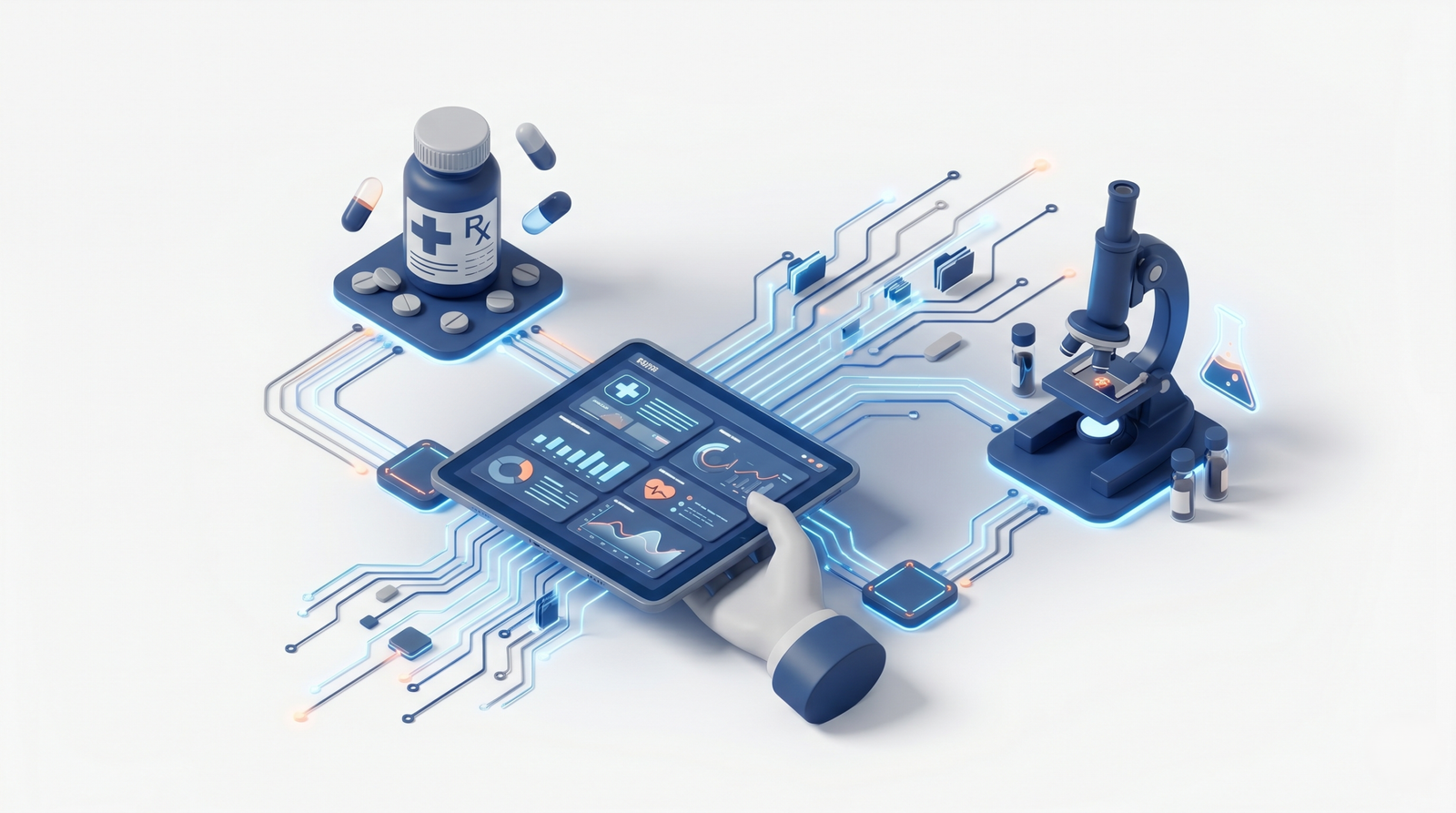
To achieve this level of operational fluidity, we rely on smart software modules that cover granular operational details:
- Strict Pharmacy & Inventory Control: The system directly links doctor prescriptions to the pharmacy inventory. Once dispensed, the medication is automatically deducted from stock. The system sends early alerts for low inventory or medications nearing their expiration dates, completely eliminating financial shrinkage.
- LIS/PACS Laboratory Integration: Utilizing advanced API integration services in Jordan, we connect medical equipment directly to the central system. Lab and radiology results instantly populate the patient’s EMR, allowing doctors to make immediate clinical decisions.
- Automated Appointment Scheduling: Patients can book appointments via an online portal. The system’s automated distribution logic prevents waiting room overcrowding and balances the workload evenly among on-duty physicians.
Financial Management & Insurance Claims: Maximizing Revenue (RCM)
Financial administration poses a significant challenge for major medical facilities, particularly due to complex health insurance files and multiple billing parties. Hospital and Clinic Management System Development Amman includes an advanced Revenue Cycle Management (RCM) module designed to collect every earned Dinar accurately and rapidly. The smart system automates financial auditing from the moment insurance data is entered, drastically reducing human errors that lead to claim rejections.

- Automated Health Insurance Claims: The system links with Jordanian insurance databases to instantly verify coverage limits and copays. It compiles and medically audits claims electronically before submission, minimizing rejection rates and accelerating cash collection.
- Doctor Commissions Tracking: Automated calculation of physician dues based on consultations and surgeries, accounting for diverse contract types (full-time vs. visiting doctors), which eliminates accounting disputes.
- Tax-Compliant E-Invoicing: Ensures all generated invoices comply with the Jordanian Income and Sales Tax Department requirements, automatically preparing necessary tax reports.
Smart Dashboards & Medical Business Intelligence
Data is the ultimate asset in healthcare. We provide hospital directors with a command center that clearly displays Key Performance Indicators (KPIs). Interactive dashboards highlight operational bottlenecks, top-performing clinics, and bed occupancy rates. Linking this financial and clinical data is the essence of business automation in Jordan, enabling board members to make capital expenditure decisions based on hard data rather than estimates.
Legal Compliance, Security, and Medical Marketing
In healthcare, a data breach is a legal and ethical disaster. Our systems are engineered to comply with international standards (such as HIPAA) and local Ministry of Health regulations. We deploy End-to-End Encryption and automated, geographically distributed backups to guarantee that no medical record is ever compromised.
Once your internal operations are flawlessly automated, it is time to attract high-ticket patients, particularly in the medical tourism sector. We recommend collaborating with our digital marketing experts at Dot Media to launch targeted international campaigns that drive patients directly to your new digital booking portals.
The engineers at Dot Tech are ready to diagnose your facility’s technical challenges and prescribe the ultimate software solution. Contact us today to schedule a comprehensive technical consultation.
Frequently Asked Questions: Hospital Information Systems (HIS)
Can the system integrate with existing biometric devices and ERP accounting software?
Yes, the system is built with a flexible architecture utilizing advanced APIs. This allows seamless integration with existing biometric time-attendance devices and legacy ERP accounting systems, creating a centralized management network without replacing your current hardware.
How is patient data protected from breaches or data loss?
The system is hosted on secure, DDoS-protected cloud servers utilizing advanced data encryption. We apply strict Role-Based Access Control (RBAC) and automated backups to ensure full compliance with international privacy laws.
Does the system support international payment gateways for medical tourism?
Absolutely. To support medical tourism, we integrate both local and international payment gateways (such as Visa, MasterCard, eFAWATEERcom, and CliQ), enabling remote appointment booking and pre-payments in multiple currencies.
How long does it take to implement the system in a hospital?
The timeline depends on the facility’s size. We utilize a “Phased Implementation” strategy, typically launching core modules like Reception and Outpatient Clinics first, then gradually rolling out Pharmacy, Labs, and Financials to ensure zero disruption to your daily medical operations.
